


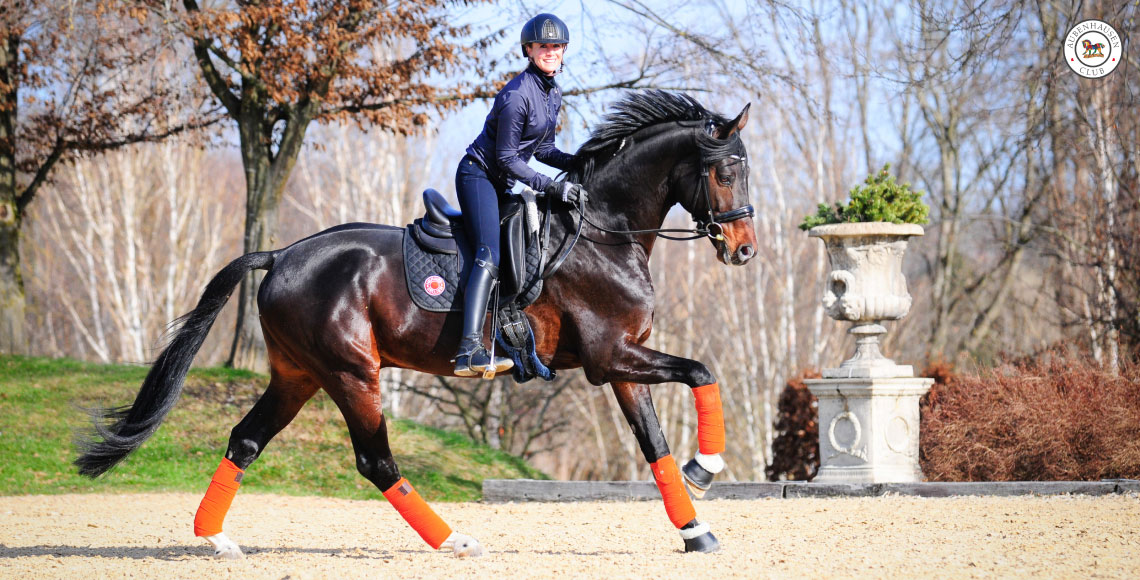
Ready for Spring
Spring is in the air, the days are getting longer, and temperatures are rising. Many riders are looking forward to spending more time outdoors with their horses. After months of intensive indoor training, everyday routines can quickly become monotonous. That’s why tips for a varied spring training routine are particularly valuable: new training stimuli, small changes in daily routines, and more time outside not only bring fresh motivation for horse and rider but also support your horse’s physical and mental development.
Tips for a varied spring training routine
After the winter months of indoor training, not only riders but also horses enjoy more variety in their daily routines. Spring offers many opportunities to introduce new training stimuli and spend more time outdoors. Jessica von Bredow-Werndl intentionally incorporates variety into her training:
“Variety with the horses is always very important to me, and spring is naturally a great invitation to ride extensively in the forest. It really recharges our energy.”
A ride out in the open can be a welcome change for both horse and rider, providing mental relaxation while simultaneously bringing new motivation for training—whether indoors or outdoors. In addition to rides, small changes in training can also provide new impulses—especially for young horses. Groundwork, for example, can be easily incorporated before or after riding, such as preparing for the piaffe or practicing lateral movements from the ground. Pole work or cavaletti exercises also add variety: a trot line, single canter poles, or several poles in a row promote rhythm, balance, and focus. Occasionally, even a small jump can be integrated into training. These varied elements not only boost motivation but also help horses work physically in a versatile way and experience new movement stimuli.
Burn excess energy while getting strengthened for dressage work
At Aubenhausen, the team also has access to a galloping track, both for conditioning and to add variety. The horses get to have fun, burn some excess energy, breathe deeply, and develop stamina. If you don’t have a track or a trail that can serve as one, you can also get into two-point at for a little hand-gallop. This also doesn’t sound like much, but it has a significant effect. In many barns, this is not nearly done enough. Hardly anything else is as effective in loosening and strengthening the horse’s back and abdominal muscles. This also develops range of motion, shoulder freedom, and the jump in the canter – all of which have a positive impact on your dressage training.

Tips for a successful start to the competition season
To start the competition season well-prepared after the winter break, Benjamin Werndl intentionally focuses more on individual exercises after winter. While the winter months are often devoted to building basic skills, practicing segments or specific lines from a test helps assess the current training level. “After winter, I like to include more segments from tests in training. It’s a bit like looking in a mirror—you quickly notice where you stand and whether everything really works as it should.” Riding multiple movements in succession shows how supple and relaxed the horse really remains. At the same time, it’s a valuable exercise for the rider to maintain the usual relaxation from training—even when riding a test or parts of it, which may bring a bit more tension to the situation.
Simulating competition conditions can also help create a smooth transition into the season. An external clinic, flower boxes or umbrellas at the arena edge, music, or a mock competition on your own grounds are just a few ways to familiarize both yourself and your horse with competition conditions early on.
And last but not least, the start of the show season is a great time to examine your own fitness and your seat a bit more closely. Have some errors or imbalances crept in? With our DressurFit® program, you have the opportunity to check your current fitness level as a rider every four weeks. This enables you to immediately recognize blockages, restrictions in your range of motion or differences side to side and actively work on them to best prepare as a rider and optimally support your horse.
Start now with your individual training plan! Discover DressurFit® now!