


How neuro-athletics can help you improve your riding
Riding is not just a matter of feel and technique; it also involves how our nervous system controls the many subtle movements performed in the saddle. Neuro-athletics in equestrian sports is a new form of training that can make a small yet significant difference in riding. This training focuses on how the brain controls movements and how to improve this control.
The nervous system has three main functions
1. Stimulus perception:
The nervous system captures stimuli from our environment and within our bodies, including visual signals from our eyes and proprioceptive feedback from our joints and muscles.
2. Stimulus processing:
It interprets and integrates these signals to determine how we should respond.
3. Response control:
The final task is to control our movements, meaning every action we take begins in the brain.
Targeted nervous system training through Neuro-athletics in equestrian sports
Regular training can help us develop our nervous system in the same way we train our muscles. This has a direct impact on a rider’s balance and coordination. Neuro-athletics focuses on visual, vestibular, and tactile sensory systems, improving our perception through sight, balance, touch, and temperature sensitivity.
Visual perception in riding
“Visual perception plays an important role in riding,” explains performance coach Marcel Andrä. “Riders need to react quickly to movements and changes around them in a precise way. Training visual perception influences how riders see their environment, which directly impacts their balance and coordination on the horse.”
The role of balance in the saddle
Our balance system, located in the inner ear, stabilizes us during dynamic movements like riding. “It helps us understand our position in space,” says Marcel. Better balance allows riders to adapt more easily to their horse’s movements, fostering a stronger connection.
How balance influences your connection with your horse
“My balance allows me to sit upright, be flexible, and move with the horse,” explains Benjamin Werndl. “I should be able to maintain the same posture on the ground without the horse. When I add energy during training, I try to move with the horse. When I ride, I focus on sitting deeper to keep the horse in front of me. This fine-tuning is crucial. Balance isn’t a permanent state; it needs constant work.” Good balance means the horse can carry itself from behind, allowing the rider to relax. “When the horse handles itself, I can take a more supporting role, meaning I don’t have to push it forward or hold it back. I simply act as a balancing point. The better I condition my body, the more feel I gain. When I have better awareness of my body, I can also feel the horse’s body better, which is essential for effective riding.”
Feeling and movement
The tactile system allows us to sense movements in our joints, which is particularly important for improving our seat and connection with the horse. A well-trained tactile system enables you to respond more finely to your horse. “It’s crucial to provide coordinated aids in the saddle. For example, I should execute a half-halt using my entire seat, coordinating my driving aids with my hands. I drive against the hand, and the horse responds accordingly. This requires good fine coordination. If I apply rough aids, it can be neither effective nor graceful. I aim to support the horse while also reacting to its movements, making coordination vital. That’s why we train the whole body, not just individual muscles. In the saddle, we engage all muscle groups; riding is a holistic experience. I find that really exciting,” Benjamin adds.
2 neuro-athletic exercises for you
Here are two neuro-athletic exercises you can do at home:
“No-No” Exercise
1. Stand up straight and tuck in your chin to create a slight double chin.
2. Either fixate on a visual point in front of you, as shown in the video, or extend one arm forward with your thumb pointing up.
3. Focus on your thumbnail and quickly turn your head from left to right for 15 seconds. It’s important to maintain focus on the fixed point and be able to see your thumbnail clearly and sharply.
4. Take a short break and repeat the exercise.
During the exercise, ask yourself if you can maintain the tempo without losing sight of the fixed point.
“Eye Push-Up” Exercise
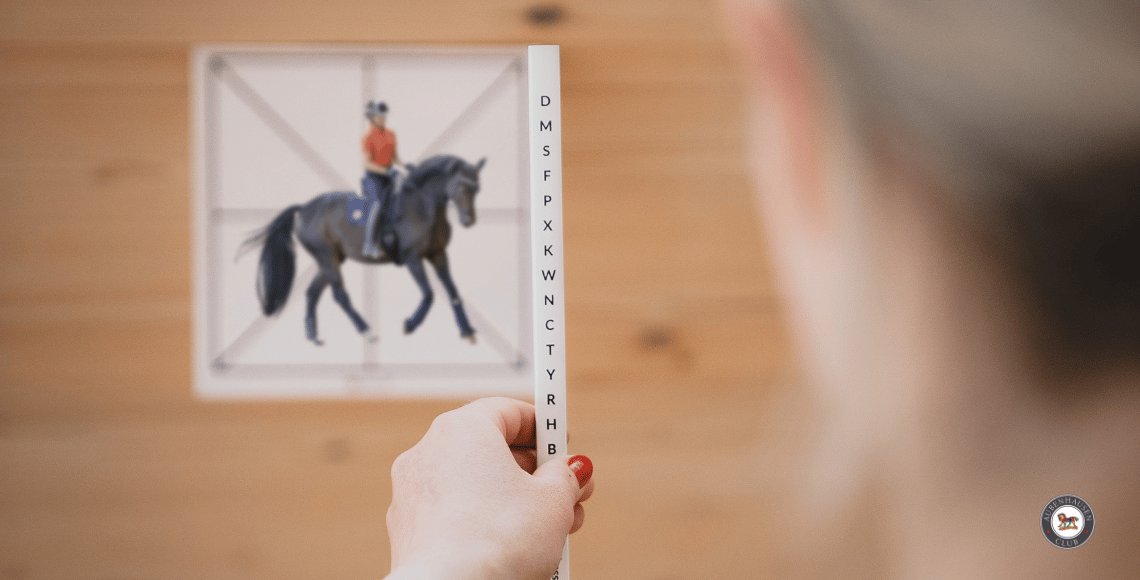
1. Stand upright as in the previous exercise, tuck in your chin to create a slight double chin, and extend one arm forward, again using your thumbnail as a focal point. Alternatively, you can use a vision stick as your focal point.
2. Bring your thumb towards your nose and then extend it back out. Repeat this movement 5 times.
3. Take a short break and repeat the exercise.
Pay attention to whether you see double images or if your focal point appears duplicated. It’s okay if your thumbnail looks blurry. This exercise helps you identify weaknesses in your visual and tactile systems.
With these two exercises from neuro-athletics, you can test and train your nervous system. Both tests help you identify potential weaknesses in your visual and tactile systems. Afterward, perform the following exercises to improve:
Exercise examples for specific issues: narrow half-kneeling position
The narrow half-kneeling position is an excellent exercise for improving balance and stability. It forms the foundation for further exercises that strengthen balance and body control. For riders, this position is particularly valuable as it promotes fine motor skills and helps adapt better to the horse’s movements for more precise aids.
• Starting Position:
Position your front foot and back knee on an imaginary line. The back knee should be on the ground, and the front foot should be stable, allowing you to maintain a stable yet challenging balance. Keep your upper body upright, with your pelvis slightly tilted forward to maintain a neutral spine position.
1. Eye Pursuits to the Left and Right
Maintain the narrow half-kneeling position. Extend your right arm forward, thumb up. Fixate your eyes on your thumb. Move your thumb to the side (first to the left and then to the right) without turning your head. Your eyes should follow your thumb. Repeat this for 10 repetitions per side.
This exercise improves your eye mobility and visual system, which is important for balance and body control. This helps you keep your upper body stable and reduces head nodding.
2. Balance with Arm Raise
Begin again in the narrow half-kneeling position. Raise the opposite arm (e.g., left arm when the right foot is forward) above your head. Hold this position for 30 seconds while maintaining your balance. Switch sides and repeat the exercise.
This exercise strengthens your core muscles and improves your balance. It helps you keep your upper body stable and move harmoniously with your horse’s movements, allowing for more precise aids and better overall balance.
3. Dynamic Head Movements
Hold the narrow half-kneeling starting position. Turn your head to the left and then to the right while keeping your body stable. Ensure the movement is controlled, and focus your eyes on a point at eye level. Repeat this for 10 repetitions per side.
This exercise trains your balance system and helps you move your head independently from your body, which is crucial for maintaining balance in the saddle and responding quickly to your horse’s movements. You learn to coordinate head movements and balance better, helping you stay more stable and provide more precise aids.
Neuro-athletics is also a key component of the DressurFit® program – we show you effective exercises to improve your seat and refine your aids. Click here to learn more about your individual training: More about DressurFit®